
ERP selection for e-fuels start-up: How INERATEC became scalable with structured process consulting
Initial situation
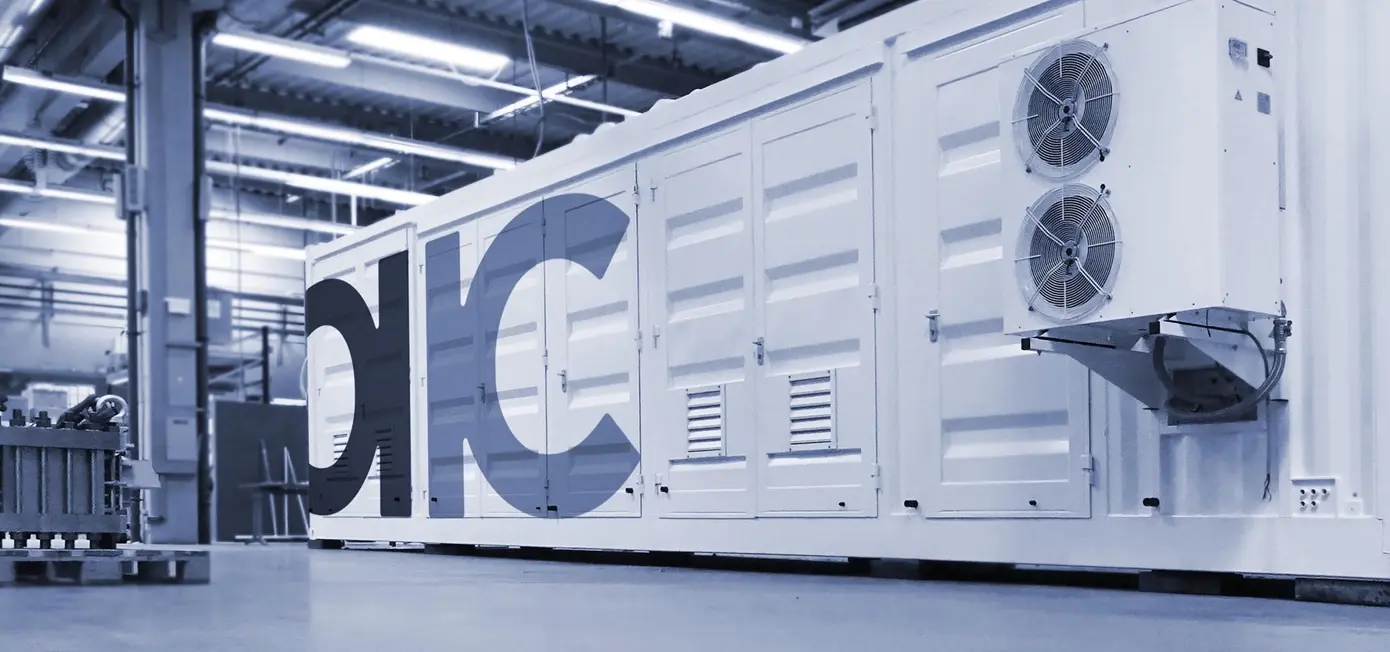
INERATEC, founded in 2016 as a spin-off of the Karlsruhe Institute of Technology, specialises in modular power-to-liquid plants. The company produces synthetic fuels from CO₂ and hydrogen in containerised plants – with international projects in the Netherlands, Chile and the largest European e-fuels plant in the Höchst Industrial Park.
With a €118 million financing round successfully completed in 2024 and over 30 customers worldwide, the company faced a critical challenge: the existing IT structures from the start-up phase could no longer cope with the exponential growth.
Core challenge
The problem had three dimensions: First, fragmented data silos between engineering, production and finance without end-to-end process integration. Second, a lack of scalability in order processing for international container plant projects. Third, a lack of transparency regarding project-related costs and resources for complex power-to-X plants.
Methodological approach
The consulting project followed a structured three-phase approach based on the MECE principle:
Phase 1 – Process assessment: Documentation of current processes in engineering, project management, supply chain and finance. Identification of 14 core processes with a total of 67 sub-processes. Prioritisation according to value creation contribution and digitalisation potential.
Phase 2 – Process optimisation: Application of the first principle approach to reduce complexity. Elimination of redundant approval loops in project management. Standardisation of parts list logic for containerised plants. Definition of interfaces between engineering tools and commercial systems.
Phase 3 – ERP recommendation: Creation of structured specifications with 124 weighted requirements. Conducting a market analysis with six ERP providers. Evaluation according to criteria such as project business capability, cloud readiness, international multi-client capability and industry fitness for project-based manufacturers.
Result and recommendation
The recommendation was for a cloud-based ERP system with native project management integration. The solution meets the requirements for multi-currency capability for international projects, integrated project controlling according to the earned value methodology, interfaces to CAD/PLM systems for engineering integration, and compliance functions for subsidy documentation.
Quantifiable outcomes
Process optimisation has resulted in concrete improvements: a 35% reduction in administrative throughput time for project creation, a uniform database for real-time reporting to investors and funding agencies, scalable infrastructure for planned growth to 20+ parallel international projects, and preparation for future certification requirements in accordance with ISO 9001 and ISO 27001.
What is particularly important when selecting ERP for clean tech start-ups?
Clean tech start-ups such as e-fuels producers need ERP systems with strong project management functionality, subsidy tracking and international multi-client capability. The ability to scale from a few to dozens of parallel projects is crucial.
Why do e-fuels companies have special ERP requirements? E-fuels producers such as INERATEC work on a project basis with complex parts lists for containerised plants. The ERP must integrate engineering data, map international supply chains and automate compliance documentation for subsidies.
How long does it take to select an ERP system for a start-up?
A structured ERP selection process involving process analysis, specifications and supplier comparison typically takes three to four months, depending on the size of the company and the maturity of its processes.
INERATEC
Number of Employees 100 Customer Focus B2BThe solution meets the requirements for multi-currency capability for international projects, integrated project controlling according to the earned value methodology, interfaces to CAD/PLM systems for engineering integration, and compliance functions for subsidy documentation.