What Is Digital Transformation and How Does It Create Real Business Value?

Digital transformation is the structured change of processes, operating models and technology to improve performance and long-term resilience. It creates business value when the operating model is redesigned first and the technology follows — not when tools are introduced into processes that were never fixed.
TODAYTARGET MODELOrder handlingMaster dataProductionPurchasingReportingOrder handlingMaster dataProductionPurchasingOperating model
Transformation redesigns the operating model first. Technology follows.
Why Dreher Consulting

What does successful digital transformation actually mean?

Successful digital transformation is operational redesign, not tool introduction. We analyse how the business actually runs today — the processes, the decision points, the data that moves between them — and define the target operating model before any system decision is made. Technology then implements a decision that has already been taken, rather than standing in for one.

Dreher Consulting approaches digital transformation by analysing current operating models, identifying improvement potential, and defining a clear roadmap for change. That roadmap is written against the enterprise architecture it has to run on — the applications, processes and data every function depends on.

We help organisations translate strategic goals into practical initiatives, ensuring that technology investments support efficiency, agility and sustainable growth rather than creating additional complexity. The redesign is carried into daily operations through structured process management, so the new operating model is the one people actually work in.

Discuss your transformation scope
Decision summary

Does this engagement fit your company?

A quick read before you spend a meeting on it. If most of this matches your situation, a transformation engagement is worth scoping — if it doesn't, we will say so.

When this fits

Operating-model change, shared data, stalled pilots

  • You are changing how the business operates, not replacing a single system

  • Several departments depend on the same data and disagree about it

  • Previous digitalisation initiatives stalled after the pilot

  • You need a defensible sequence, not a wish list

What we need from you

A decision-maker, the process owners, and the model before the technology

  • A decision-making person from the management team, present at the workshops

  • Access to the people who actually run the processes

  • Your current systems inventory, however incomplete

  • Agreement that the target operating model is decided before the technology

See what you get from the engagement
Why this approach is different

A technology shortlist — or an operating model that works?

A typical digital transformation programme
The Dreher approach
Starting point
A technology shortlist
The operating model and the processes behind it
Sequencing
Everything at once, or a pilot that never scales
Ten key success factors, run in parallel and in sequence, adapted per industry
Governance
Owned by IT
Owned by the management team, with named decision points
Technology decisions
Chosen first, justified later
Taken after the target model is agreed
Benchmarking
Absent, or vendor-supplied
Capability ranked against competitors and industry leaders
Measurement
Project milestones
Economic benefit assessed, then measures readjusted
Our position
Implementation partner with licence revenue
Vendor-neutral since 1992
Our take

Ten success factors, not a phase plan

Digital transformation is not a marketing idea or a gimmick — it is part of how this firm has worked for over thirty years. We do not run it as a sequential phase plan, because the dependencies do not behave sequentially. We work ten key success factors in parallel and in sequence, adapted to what your industry actually requires, and we readjust as the economic benefit becomes measurable.

The Action Plan

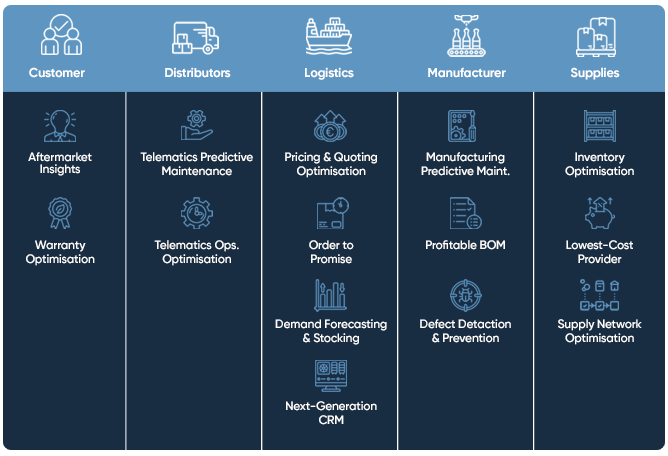
Digital Transformation – Action Plan

Embarking on a digital transformation initiative can be a major challenge for both management and staff due to the changes that accompany the implementation of new technologies and the optimisation of business processes.

The focus of our work is therefore not the marketing term "digitalisation", but the implementation of a digital transformation. This is not a marketing idea or gimmick, but part of our company DNA. We are implementation consultants here to support our clients through our work and expert knowledge to ensure their companies remain competitive in a digital world.

Customer


Aftermarket Insights

Warranty Optimisation

Distributors


Telematics Predictive Maintenance

Telematics Ops. Optimisation

Logistics


Pricing & Quoting Optimisation

Order to Promise

Demand Forecasting & Stocking

Next-Generation CRM

Manufacturer


Manufacturing Predictive Maintenance

Profitable BOM

Defect Detection & Prevention

Supplies


Inventory Optimisation

Lowest-Cost Provider

Supply Network Optimisation

How we work

Maturity first, model second, then the roadmap.

We measure digital maturity first, agree the target operating model second, and only then sequence the roadmap. Every stage produces a document a management team can decide on.

Stage 01

Digital maturity assessment

We score your current digital maturity across the dimensions of the Dreher Digitalisation Index, and compare it against competitors and the industry leaders in your sector.

DDI™ score
Stage 02

Target operating model

We define how the business should run — processes, decision rights, the data that moves between functions — and write it down before any system is discussed.

Model document
Stage 03

Roadmap and sequencing

We turn the gap between the two into a sequenced roadmap with dependencies, owners and an economic benefit case per step.

Sequenced roadmap
Stage 04

Prove and embed

We assess the economic benefit as it lands, readjust the measures, and build the training roadmap that makes the change stick with the people doing the work.

Benefit review
What you get from us

What do you receive as part of a digital transformation consultation?

Transformation team

A named team that drives implementation rather than supervising it.

Strategic vision with a step plan

The target model, broken into steps that can be started and finished.

Economic benefit assessment

Benefit assessed per measure, then the measures readjusted on the evidence.

Training roadmap

An individual training path so the people doing the work can adopt the change.

Benchmark report

The written comparison, with the sector median and the leader practices named.

Maturity baseline

The scored starting point every later measurement is taken against.


Benchmarking

How benchmarking is designed

01

A review of how digital transformation is currently approached in your industry

02

Your capability ranked against competitors and comparable organisations

03

The practices and process models the market leaders actually use

04

A roadmap that measures how far implementation has progressed

What the benchmark settles

Whether the gap is yours or the industry's

A capability that looks poor in isolation is sometimes standard for the sector, and a capability that looks adequate is sometimes two generations behind the leaders. The benchmark tells you which, so the roadmap spends money where the gap is real.

DDI™

Assess your digital maturity →

Disruption

Digital disruption…

Another component of our digital transformation service is the assessment of your position in the context of disruptive factors that your industry or company has to reckon with. These can be not only known competitors, but also unexpected new competitors. They may well be competitors with a higher qualitative approach or low-cost newcomers or quite nimble digital natives.

Reputation management in a globalised digital world, PR issues and threats from IT security incidents are now more important than ever.

Together with you, we create a digital transformation roadmap, with concrete tasks and milestones. The development and implementation pace for advanced ERP software or AI elements for transformation depends on your digital transformation and its readiness, as well as on your budget.

Our experience shows that a relatively small team can get two large AI applications and digital technologies on the road to digital transformation in six months.

Radically lower costs

Low-yield processes

Underutilised or poorly allocated resources

Highly routine processes

Increased customer experience

Low customer understanding & slow learning

Formulaic customer experience & value propositions

Formulaic and inflated prices

New business models

Intermediary traders

Redefiners of the value chain

Data and analytics platforms

From our project work

From fragmented master data to one number everyone trusts. What this looks like in a real project

Hagos eG · B2B wholesale

A target operating model for master-data ownership — then the sequenced roadmap.

ProblemMaster data spread across systems that disagreed with each other, so every downstream process inherited the error.

EngagementDigital maturity assessment, target operating model for master-data ownership, then a sequenced roadmap.

73%

reduction in master-data error rate · calculated in the concept

Read the digital transformation reference
Setting B2B wholesale · master data across systems
No software licences. No implementation revenue.
Vendor-neutral since 1992 — the recommendation is never connected to a sale.
Common questions

What managing directors ask before starting a transformation.

Honest answers about scope, maturity and pace — the questions that come up in nearly every first conversation about digital transformation.

Answers by:

Dr. Harald Dreher

Founder · Dreher Consulting

Since 1992 he has guided Mittelstand companies through replacing in-house-built ERP systems. He advises vendor-neutrally, taking no commission from any software vendor.

1. What is digital transformation, in practical terms?

Digital transformation is the structured change of processes, operating models and technology to improve performance and long-term resilience. In practice it means analysing how the business runs today, defining the target operating model, and only then sequencing the technology and process changes that follow from it.

2. How is digital transformation different from digitalising existing processes?

Digitalising an existing process transfers it from analogue to digital without changing how it works. Digital transformation redesigns how the organisation operates — processes, decision rights and technology together — so that measurable results follow. The focus of our work is not the marketing term “digitalisation”, but the implementation of that change.

3. Why do digital transformation initiatives fail?

Many digital transformation initiatives fail because goals are unclear, governance is weak, or technology decisions are disconnected from business reality. We address these risks by creating transparency around objectives, dependencies and trade-offs, so that initiatives are prioritised realistically and matched to what the organisation can actually absorb.

4. How do you measure digital maturity?

We score your current digital maturity across the dimensions of the Dreher Digitalisation Index, and compare your digital capabilities with those of your competitors and in the context of best-of-breed examples — where your industry stands overall in digital readiness, and who the leading players in its digitalisation are.

5. How long does a transformation programme take?
The development and implementation pace depends on your digital readiness as well as on your budget — there is no standard duration. Our experience shows that a relatively small team can get two large AI applications and digital technologies on the road to digital transformation in six months.
6. Do you recommend specific software?
No. We have been vendor-neutral since 1992 — no software licences, no implementation revenue. Technology decisions are taken after the target operating model is agreed, and are tested against your requirements rather than against a vendor’s roadmap.
Start the conversation

Three ways to start. No wrong door.

An independent read of where your transformation stands — from a firm with no software revenue behind the advice. See how we helped companies in your industry:

Recommended

45-minute independent strategy call

The full first conversation, including an initial read of your digital maturity.

Arrange a meeting
Written-first

Prefer to email?

Send us a short note about where you are — we'll reply with a clear next step, not a sales pitch.

Email us
Low commitment

Prefer to call?

A direct line to the Böblingen office — a short conversation, no obligation.

+4970317148790